








Why Investors Who Want to Buy Cheap Do Not Make Money
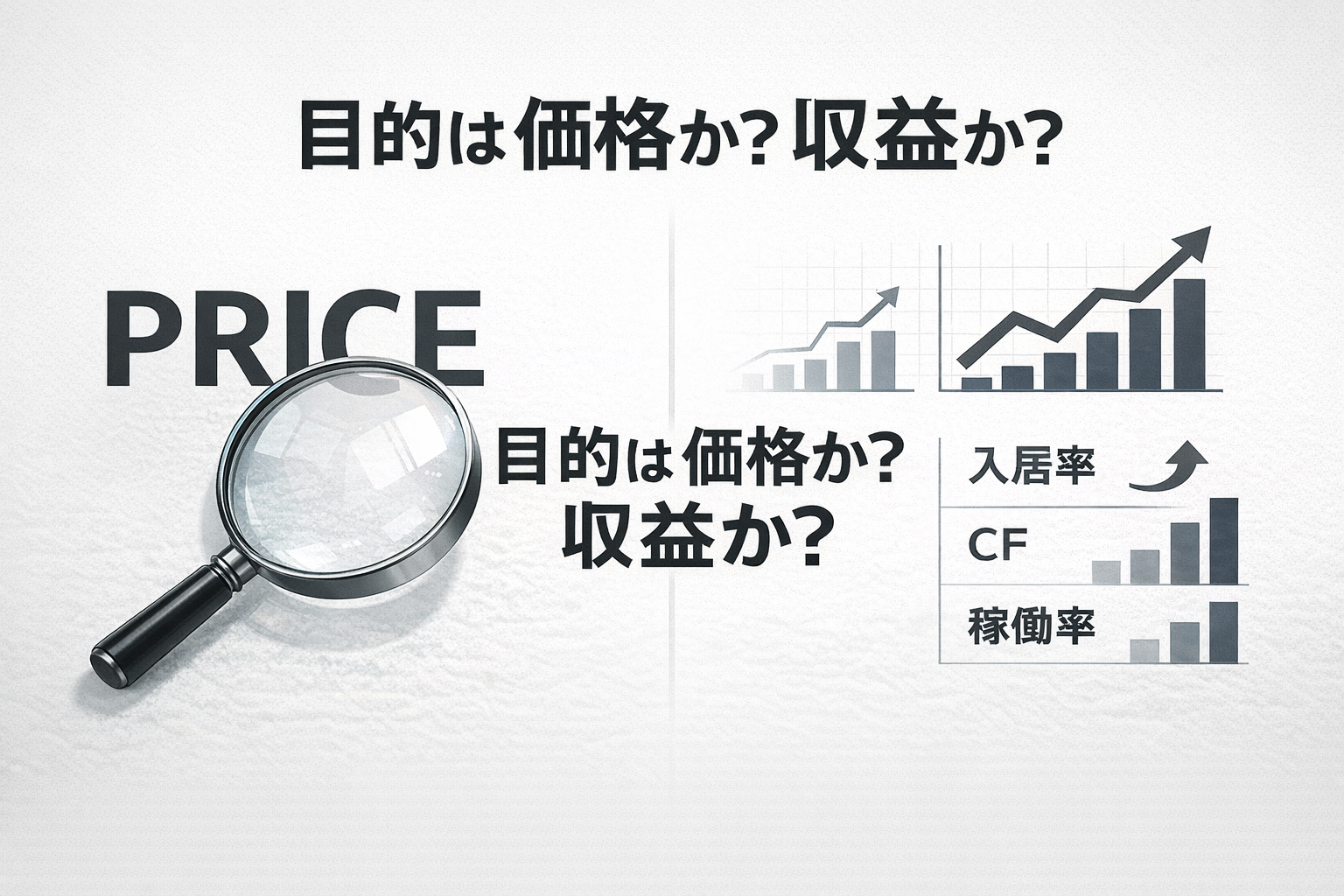
Table of Contents
- Is it an investment or just a purchase?
- Characteristics of the Sapporo market
- ■What are profitable investors buying?
- ■The numerical yield trap
- ■Far from station = no, not necessarily.
- ■ "No financial institution evaluation" is true.
- ■Time is on your side for strong properties.
- ■Sapporo Order to win in real estate investment
- ■ What does "strong property" mean?
- Suburbs do not = weak, the essence is "can it be explained?
- ■ Difference between a shopping investor and a strategic investor
- ■Whether you can get financial institutions on your side
- ■ The greatest test of time
- ■Sapporo To win in real estate investment

Is it an investment or just a purchase?
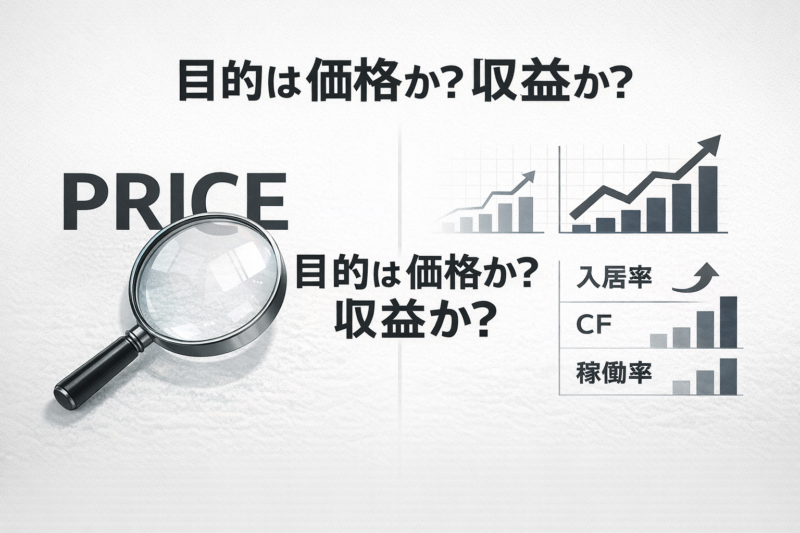
In real estate investment, "buy low" is spoken of as a correct principle.
Certainly price is important. However, having seen numerous projects in the Sapporo real estate investment scene, I can say one thing clearly.
Those whose goal is to buy cheap are “shopping” rather than investing.
Investment is the act of designing future income and exit.
Shopping, on the other hand, is an act whose purpose is to "feel like you are getting something now.
This difference will make a big difference in the outcome five or ten years from now.
Characteristics of the Sapporo market
Cities with extreme area differences
City of Sapporo is the largest city in Hokkaido, and rental demand is relatively stable. However, the city is not homogeneous.
-
Areas near stations along subway lines
-
Central area with a concentration of commercial and medical facilities
-
Suburban area with mainly bus service
Even in the same city of Sapporo, the quality and stability of demand varies greatly.
Many of the less expensive properties are concentrated in areas with limited demand.
In other words, it is not "cheap"; the market is just factoring in weakness.
■What are profitable investors buying?
Buying “strong properties” instead of cheap properties
I will be clear here.
Profitable investors are not looking for cheap properties.
We are looking for a strong property.
What is a strong property?
-
Demand is stable.
-
Rent decline is slow
-
Easy to obtain financial institution evaluation
-
Multiple buyers can be assumed at the time of sale.
This property has such “structural strength.
Even if the price is a little higher, time is on your side for strong properties.
Vacancies are easy to recover from, and exits are easy to design.
Cheapness may seem attractive, but it is no substitute for strength.
■The numerical yield trap
Sapporo In real estate investment, we see properties with yields of over 10%.
But on the surface yield,
-
repair expense
-
Vacancy period
-
Snow removal costs
-
Risk of Rent Decline
is often not adequately reflected.
Sapporo is an area of heavy snowfall.
The burden on buildings is significant, and maintenance costs cannot be underestimated.
It is easy to be reassured by the size of the numbers.
However, investments should not be judged by "current numbers" but by "sustainability.
■Far from station = no, not necessarily.
The most dangerous thing is to stop thinking.
I am not saying that properties far from the station are no good.
The problem is,
It's about stopping making decisions based on a conditioned reflex: "I won't buy because it's too far from the station."
Station distance is an important factor, but it is only one of many.
-
Ability to attract customers to nearby facilities
-
balance of work and residence
-
Parking demand
-
household structure
Without looking at these factors as a whole, true strength cannot be determined.
There are properties that are far from the station but have stable occupancy.
Conversely, there are some properties that struggle with a lot of competition even though they are near a station.
A strong property is not a "property with perfect conditions",
The property has grounds that outweigh the weaknesses.
■ "No financial institution evaluation" is true.
Sapporo There is a word often heard in real estate investment.
The property will not be evaluated by financial institutions."
But I think.
Did you really check with your financial institution?
In fact, we have taken properties to financial institutions ourselves that we were told by other real estate agents that they would not be evaluated.
Results,More than 80% of the respondents rated it as good.
Financial Institution Rating,
-
person in charge (of an area of work, but not necessarily supervising other staff)
-
branch office
-
time
-
lending attitude
-
How to describe the property
It depends on the
Not "no evaluation."
In many cases, they just haven't gone for the evaluation.
Making decisions based on images and rumors is not an investment.
Confirming, negotiating, and assembling is an investment.
■Time is on your side for strong properties.
The most important characteristic of a strong property is that its valuation does not collapse over time.
For example,Sapporo Station neighborhoods and areas along the subway line.
-
There is an influx of population.
-
There is a commercial concentration
-
Wide range of buyers
There is such structural support.
Weak properties, on the other hand, will manifest risks over time.
-
prolonged vacancy
-
Increase in repair expenses
-
Difficult to sell
Cheap properties are often at their peak “now”.
Strong properties can fight in the “future.
This is where the difference in long-term earnings comes in.
■Sapporo Order to win in real estate investment
Do not make a mistake in the order.
-
Analyze the strength of the area
-
Understand the demand structure
-
Check the financial assessment
-
Design an exit
-
Finally, determine the price.
The moment you start with price, your thinking is distorted.
When the goal is to buy cheap, the rationale becomes an afterthought.
It is not an investment, it is a purchase.
■ What does "strong property" mean?
Let me reiterate here.
A strong property is not a property in good condition.
“The property is ”structurally protected."
For example, central Sapporo.
Odori Park in the vicinity of andSusuki no Mori Area,
-
commercial function
-
tourism demand
-
Office demand
-
traffic node
are overlapping.
In other words, demand is not unidirectional.
Properties that rely solely on students or on specific companies are weak.
However, areas where demand is multilayered are strong.
If one collapses, the other supports it.
This is what “strength” really is.
Suburbs do not = weak, the essence is "can it be explained?
Don't get me wrong,
This means that not all suburban properties are weak.
For example,
-
Large hospital nearby
-
There is an industrial park.
-
There is a university campus
-
Parking demand is overwhelmingly strong.
With this kind of backing, you can fight even if the station is a distance away.
The problem is, "I figured it would work because it was cheap."
This is the decision.
A property that cannot explain why it is cheap is not a strong property.
Rationale, not price.
If you misjudge this point, your investment will be governed by your senses.
■ Difference between a shopping investor and a strategic investor
Investors who want to buy cheap,
We will do our best to negotiate prices.
As low as 1%, as low as $1,000,000.
Of course, negotiation is important.
But strategic investors are different.
-
Is there room for rent growth?
-
How many competing properties are there?
-
What will the demographic composition be in 10 years?
-
Who will buy it at the time of sale
We spend time designing these futures.
Shopping investors concentrate on "how much can I buy now?
Strategic investors concentrate on "how much it will sell for in the future".
The perspectives are completely different.
■Whether you can get financial institutions on your side
Sapporo Investors who are scaling up their real estate investments are,
Without exception, we are building relationships with financial institutions.
The financial assessment is one measure of the “strength of the property.
Previously from other companies.
When you bring in a property that you have been told "will not appreciate."
We talked about the 80%+ rating.
It is not only the results that are important here.
-
How the materials were assembled
-
How did you explain the income and expenses?
-
How did you present the exit?
The evaluation is what you go to get.
Those who stop at "I hear it won't appear" are not competing in the first place.
Profitable investors are facing both the market and financial institutions.
■ The greatest test of time
Real estate investment is not a short-distance race.
Five or ten years of time will reveal the true strength of the property.
Weak properties are,
-
Rise in vacancy rate
-
Increased repair costs
-
Decline in sale price
will slowly take effect.
Strong properties are,
-
maintenance of rent
-
Vacancy recovery
-
Stable market valuation
are accumulated.
The difference is not all at once.
But it will certainly open.
People who buy cheap properties and people who buy strong properties.
Ten years from now, the financial situation will be a different world.
■Sapporo To win in real estate investment
Let me summarize again.
If your goal is to buy cheap,
They are shopping, not investing.
The profitable investors are,
We are not buying cheap property.
They are buying strong properties.
And,
-
Analyze the area and
-
Read demand
-
Confirm financial assessment and
-
Design the exit and
-
Finally, determine the price.
This order is followed.
Sapporo Real estate investment is not a market where you can win by looking at price alone.
Understand urban structure, understand finance, and understand time frames.
Choose strength, not cheapness.
Only from there can long-term profits be generated.
Do you want to end the investment with shopping or elevate it to a strategy?
The dividing line is whether or not one looks at the structure before looking at the price.

Representative director
Success in real estate investment is not achieved by luck or coincidence. I believe that every encounter, decision, and outcome is inevitable for a reason. That's why I take responsibility for each and every project and believe in finding the best path forward with reliable information and strategy.