







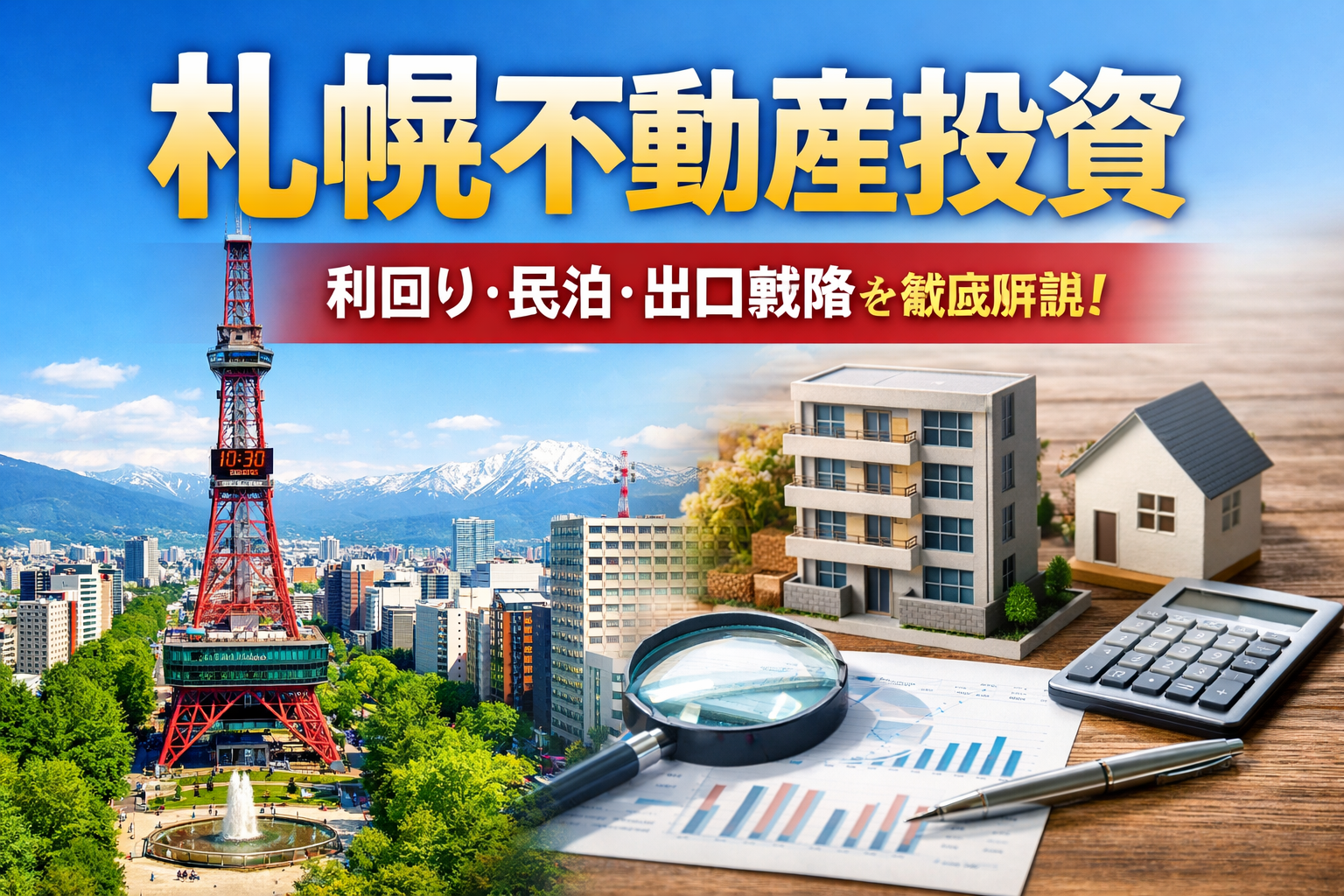
Sapporo Real Estate Investment: Is It Profitable? A Complete Explanation Covering Yields, Areas, Minpaku (Short-Term Rentals), and Exit Strategies
Regarding the question, "Is real estate investment in Sapporo profitable?", the answer is simple if you're just looking for a conclusion. Sapporo is not only a viable investment destination, but with the right strategy, it's a very well-balanced market where you can aim for both stable income and capital gains.
However, there is something you should understand as a prerequisite for that. It is that it is not "profitable because it is Sapporo." The results will vary greatly depending on whether you can correctly understand the market structure of Sapporo and have a consistent strategy for property selection, operation, and exit.
In actual practice, even within the same Sapporo area, there are investors who consistently generate profits over several years, while others struggle with vacancies and worsening financial performance. This difference is not due to market issues but rather the accuracy of their decision-making.
In this article, we will explain, at a practical level, the "market structure," "the essence of yield," "area selection," "the option of minpaku (short-term rental)," and
Table of Contents
- The reason real estate investment is successful in Sapporo lies in its “structure.”
- Reasons why judging solely by yield figures can lead to failure
- The success or failure of an investment is almost entirely decided by site selection.
- Sapporo Minpaku: An Option for Maximizing Revenue
- Exit strategy determines the final profit.
- Summary | Sapporo Real Estate Investment: Results are Determined by Strategy
The reason real estate investment is successful in Sapporo lies in its “structure.”
Sapporo is a viable investment target not just because of its population size. What's important is "whether there is a structure for sustained demand."
Sapporo is the economic, employment, and educational center of Hokkaido, and it is a city that continues to attract people from within the prefecture. The stable influx of young people and single-person households is a particular characteristic, and this demographic underpins the rental market. The concentration of universities, vocational schools, and corporate branches generates consistent demand for rental properties from both students and working professionals.
Furthermore, although the population as a whole in Hokkaido is tending to decrease, the concentration of population in Sapporo is also a trend that cannot be overlooked. As migration from rural areas to urban areas continues, the rental demand in Sapporo tends to be relatively stable.
In addition, the balance between property prices and rents is another major characteristic of Sapporo. Compared to the Tokyo metropolitan area, acquisition costs are lower, while rent levels are maintained at a certain level or higher, creating an environment where higher yields are consequently easier to achieve.
However, this “good balance” does not apply to all properties. Even in Sapporo, profitability varies greatly depending on the area, location, and condition of the property. Failure to understand this premise can lead to the erroneous judgment that "Sapporo is safe.
Reasons why judging solely by yield figures can lead to failure
When considering real estate investment in Sapporo, many investors' first focus is on yield. In reality, there are many properties on the market with gross yields of 7% to 10%, and these figures may seem attractive at first glance.
However, this yield indicator is very easily misunderstood. The gross yield is calculated assuming full occupancy and does not reflect actual operations.
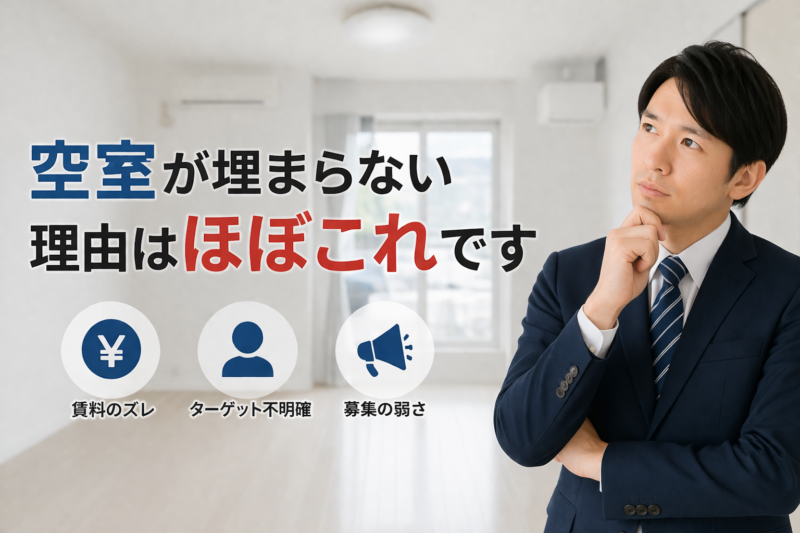
In reality, vacancies lead to decreased income if it takes time to find new tenants. As the building ages, repair costs increase, and equipment updates become necessary. Furthermore, ongoing costs like property taxes and management fees continue to accrue.
Considering these factors, it is common for the real yield to drop significantly in most cases, even for properties with a surface yield of 9%. In other words, judging solely on the basis of high yield, there is a high possibility that a gap will be created with the expected income.
What's important here is to evaluate yield not as a "temporary number" but from the perspective of "how long can it be maintained." Is the location stable for occupancy, will the rent not easily decrease, and is there differentiation from competing properties? Only when these elements are in place does the yield hold meaning.
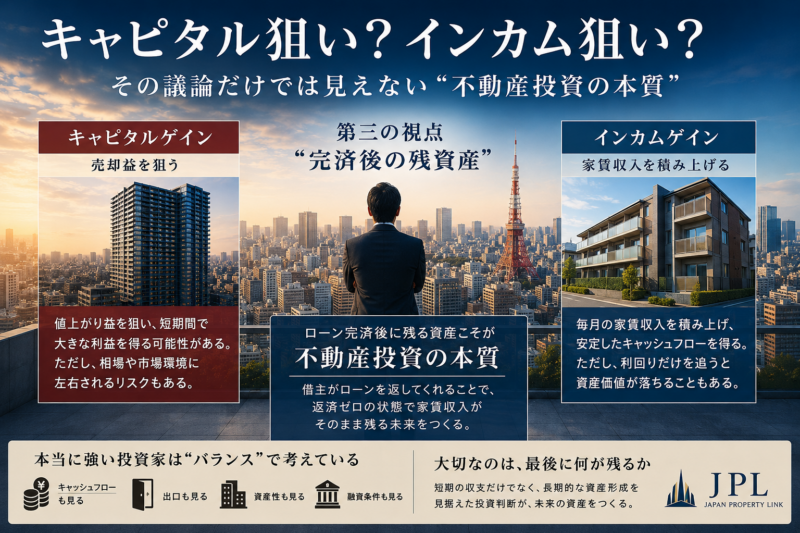
More importantly, don't think of yield and exit strategy separately. The overall return on your investment will vary greatly depending on the yield at which it is valued upon sale. It is essential to consider not only the yield at the time of purchase but also the yield at the time of sale.
The success or failure of an investment is almost entirely decided by site selection.
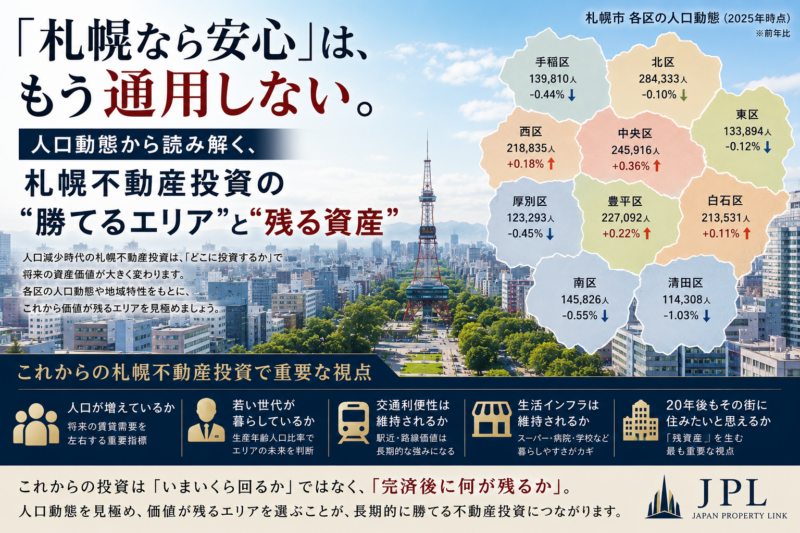
When it comes to real estate investment in Sapporo, the most crucial deciding factor is area selection. To put it bluntly, it's no exaggeration to say that the majority of your results will be determined by which area you choose.
Sapporo is a large city, but the demand is not equal across all areas. The presence of subway lines is particularly important. Sapporo's winters are harsh, and transportation methods directly impact quality of life, making subway access a very significant factor for prospective tenants.
They are evaluated not only on superficial conditions like "walking time to the station" but also on factors such as accessibility to which areas and the convenience of commuting to work or school. Areas with good access to the city center tend to have stable demand from working adults, which also helps maintain rental prices.
Chuo Ward is the area with the highest concentration of demand in Sapporo. While this reduces the risk of vacancies, property prices tend to be high, suppressing yields. However, it has the advantage of high liquidity when selling and makes it easier to plan an exit strategy.
On the other hand, areas like Kita Ward and Higashi Ward tend to offer higher yields because prices are relatively more affordable. However, even within the same ward, demand can vary depending on the specific location, making detailed analysis essential. It's necessary to consider not only the distance from the station but also the surrounding environment and convenience for daily life.
Area selection is not just a comparison of locations, but a process of determining "which tenants the property will attract." Without this perspective, there's a higher risk of acquiring a property that looks good on paper but doesn't generate stable income in reality.
Sapporo Minpaku: An Option for Maximizing Revenue
In Sapporo real estate investment, minpaku (short-term rental accommodations) have been steadily gaining presence in recent years. As can be seen from the increase in searches for "Sapporo minpaku," interest in this as an investment method is definitely growing.
Sapporo is a tourist city, and inbound demand is particularly concentrated in the winter. Minpaku (short-term rentals) that can capture this demand have the potential for higher profits compared to traditional rentals. During peak seasons, revenue can be several times the usual rental price, making it very attractive from a profit maximization perspective.
However, the risks are also clear. Occupancy rates are easily influenced by seasons and market conditions, making them less stable than rental properties. Furthermore, operations are labor-intensive, requiring an operational system for cleaning, reservation management, and more. Compliance with legal regulations is also essential.
The key here is not to think in terms of a simple either/or choice between "minpaku" (short-term rental) and long-term rental. In the Sapporo market, a flexible strategy that switches operational methods depending on the situation is realistically viable. Typically, this involves securing stable income through long-term rentals while utilizing the property as a minpaku when conditions are favorable.
By allowing flexibility in operations, it becomes possible to balance profitability and stability. Rather than fixing the intended use from the outset, it is important to select properties that include future options.
Exit strategy determines the final profit.
In Sapporo real estate investment, your exit strategy ultimately determines your profit.
Many investors focus on purchase price and yield, but the essence lies in "how much it can be sold for." The selling price is heavily influenced not only by profitability but also by market conditions and financial institutions' lending attitudes.
When selling to investors, the yield level is a very important indicator. Generally, around 8% is often used as a benchmark, and you need to calculate the purchase price backward based on whether you can sell at this level.
Additionally, whether a financial institution is likely to provide financing is an important factor. Properties that are easy to finance tend to attract a wider range of buyers, which in turn helps to stabilize the selling price. Conversely, properties that are difficult to finance tend to have a limited buyer pool, making it harder for prices to increase.
In this way, an exit strategy is not something to be considered after purchase, but something that should be designed before purchase. By clarifying "To whom and under what conditions can this property be sold in the future," the accuracy of investment decisions will greatly improve.
Summary | Sapporo Real Estate Investment: Results are Determined by Strategy
Sapporo real estate investment is an attractive market that combines stable rental demand with relatively high yields. However, fully leveraging its potential largely depends on the investor's judgment.
Don't be swayed by the yield figure; understand the underlying revenue structure. Grasp the characteristics of each area and choose properties that match demand. And have an exit strategy that considers the eventual sale.
If these can be consistently executed, the Sapporo market becomes a highly reproducible investment target. Conversely, if even one is missing, this market's characteristic is that it directly impacts the results.
Accumulating essential judgments rather than superficial information is the surest way to achieve results in Sapporo real estate investment.

Representative director
Success in real estate investment is not achieved by luck or coincidence. I believe that every encounter, decision, and outcome is inevitable for a reason. That's why I take responsibility for each and every project and believe in finding the best path forward with reliable information and strategy.