
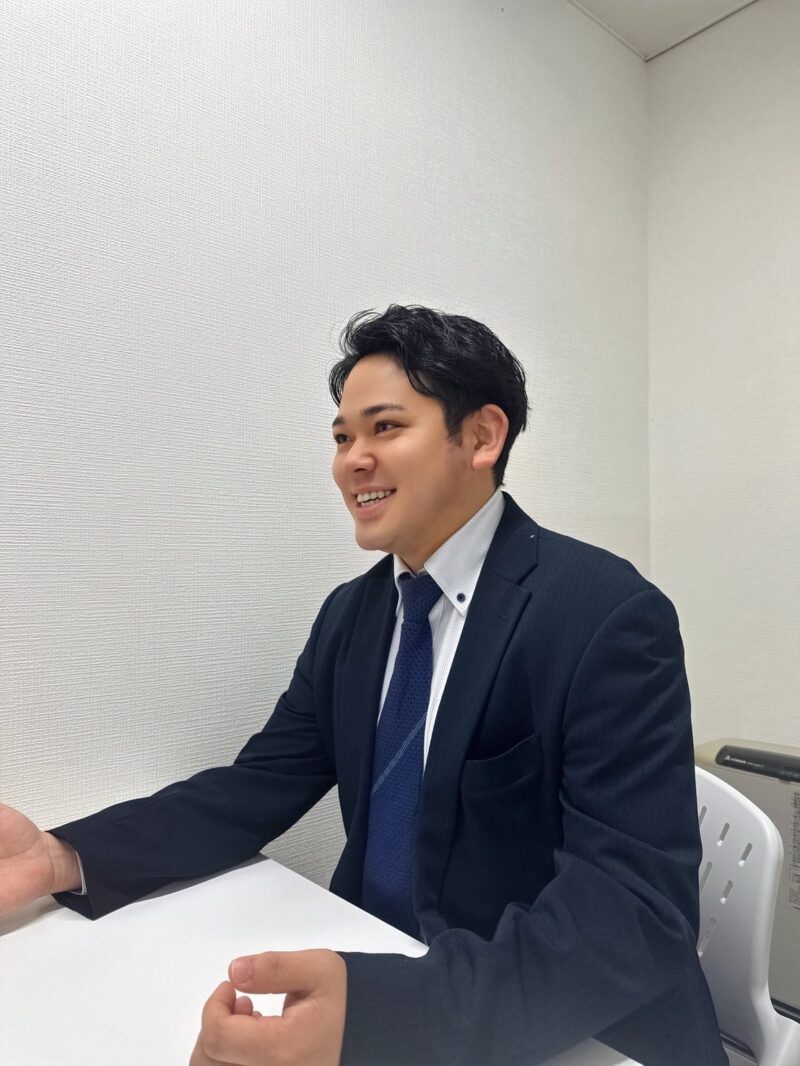







President and Representative Director
Shunsuke Maekawa Shunsuke Maekawa
To generate profit for our customers.
Nice to meet you. I'm Maekawa, the representative.
Our job is simple: "Make our clients profitable."
However, this is the most difficult.
Real estate investments often appear successful but are actually based on unsustainable assumptions.
Even if a project looks good based solely on yields and numbers, it often becomes difficult very quickly the moment its underlying assumptions collapse.
Conversely, even without flashiness, well-structured investments are less likely to collapse and, as a result, continue to generate profits for a long time.
What separates them is how they take in information, the accuracy of their judgment, and finally, their execution power to see things through.
To be honest, it's easy to fail.
If you buy a property that seems okay, you'll get a decent result.
But from there on.
When it comes to "continuing to win consistently," the difficulty level skyrockets.
That is why we do not make vague proposals.
I say what I don't know, and I say what's impossible.
Furthermore, for projects decided upon, I will thoroughly analyze them and see them through to the very end.
The real estate industry is an industry with high information asymmetry.
Those who know benefit, and those who don't lose out.
To put it extremely, it's a world where that directly leads to the result.
That's why we spend time gathering information.
Not just the information on paper, but also what can only be known on-site, and what can only be seen by actually being there and working.
By accumulating those things, we improve the accuracy of our judgments.
Another important thing I value is "reproducibility."
It doesn't make sense if it just happened to work out.
Can one make the same judgment in a similar situation and achieve the same result?
I believe there is value here.
To do that, we'll keep things as simple as possible.
Build on what is intrinsically meaningful, rather than complex schemes or methods only a specific person can use.
Because it's simple, it's difficult, and because it's simple, you can't get away with anything.
But it's precisely because it's simple that it's strong.
To be honest, it's not a company that will do just anything.
We do not handle areas like one-room investments, and we do not venture into fields where we cannot win.
Instead, I will achieve solid results in the areas I decide to focus on.
In prime urban areas, particularly in Sapporo, we have accumulated experience and established judging criteria for income-generating properties.
Our strength lies in our ability to offer proposals that go beyond a simple "buy and rent" approach, including options like operating minpaku (short-term rental accommodations).
Finally.
We aim to be an entity that people can trust and say, "We can leave this to them."
But that's not to say that it's a sensory trust,
It is the trust that is built by the results.
You can only get there by accumulating things one by one.
It's not flashy, but...
Keep doing what needs to be done.
I think that is the strongest result.
Japan Property Link's areas of expertise
Real estate companies each have their own areas of expertise.
Few companies can handle area, property type, and investment style with high accuracy.
Our company deals with profitable real estate in city centers, with a particular focus on the Sapporo area.
Regarding our relationships with affiliated companies, while we have opportunities to handle properties in the Niseko-Kutchan and Furano areas, our core focus remains on Sapporo.
In this area, we have judgment criteria accumulated through practical experience, such as rental market trends, demand trends, characteristics of each area, and tenant movements.
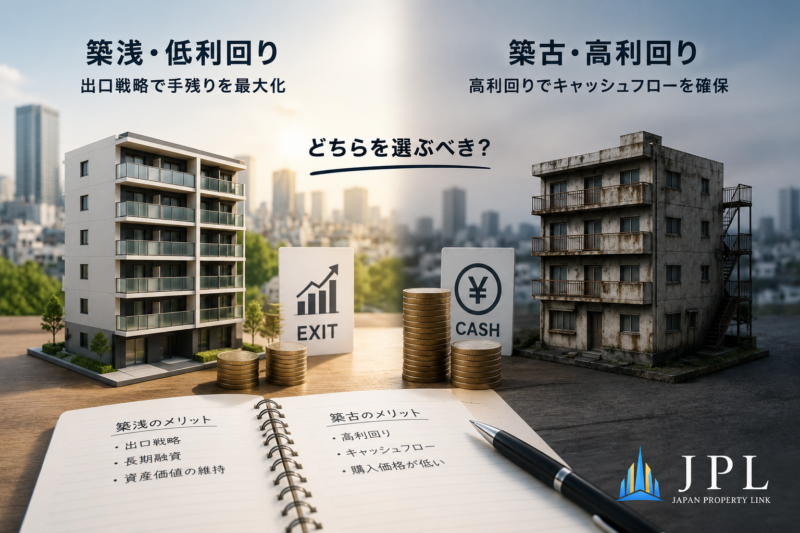
Even for properties that seem identical, depending on the operation and exit strategy after acquisition,
It's an asset that significantly changes the outcome.
That's why, rather than just property information, we examine the premises upon which that property is based,
You need to make a decision that includes how to increase value.
Another of our company's features is that we offer the option of operating a short-term rental property.
Since we actually operate at our affiliated company, we can propose not only rental operations but also the operational methods themselves.
This allows us to consider monetization from a different angle for cases that are difficult to close with general rentals.
Furthermore, since decisions can be made based on a numerical understanding of operational performance, we can provide realistic proposals that go beyond theoretical simulations.
And another thing, I quite like projects involving stores and buildings.
Compared to residential properties, there are more factors to consider in this field, and it requires expertise. However, by properly assessing these factors, it also becomes an area where investment opportunities can be created.
Because each element, such as lease terms, tenant attributes, and area compatibility, has a significant impact on profitability, there are many aspects that cannot be judged by superficial yields alone.
We also offer proposals for these types of projects after organizing their revenue structures and risk factors.
On the other hand, our company does not handle all areas.
For example, in areas like one-room apartment investment,
We do not actively handle.
The reason is simple: to focus on areas where we can leverage our strengths.
Real estate investment is not a field where you can achieve certain results across the board; a deep understanding and practical experience directly translate into results.
Therefore, we focus on a specific domain and prioritize making highly accurate proposals and executing them within that domain.
Our strength is not in "being able to do anything," but in "reliably achieving results in areas where we can win."
Even as the market environment changes, we will continue to refine our judgment criteria and execution capabilities to achieve stable results.
The basics of real estate investing as I see them
■When buying
Even for properties that feel a bit expensive, if there's something you like, I believe you should actively try to negotiate the price and consider acquiring it.
To be honest, many of the properties on the market are priced a bit high.
Therefore, it is a very natural stance to consider the possibility of price negotiation.
Even if negotiations don't lead to a deal, it's not uncommon for the other party to approach you again after some time has passed, saying, "Could you still buy it?"
In practice, a certain number of such developments can be seen.
In the current market conditions, investors' perspectives are very stringent, and many properties priced optimistically tend to reach a closing after a price adjustment.
Since there are many cases where a deal is made when the price gets closer to the fair market value due to a price reduction, it is important to continue considering properties that you feel could be a good fit with "slightly better conditions."
Another effective strategy is to identify properties that are undervalued due to distortions in supply and demand.
Among properties that are out of trend or are not correctly valued by the market for some reason, some may be undervalued relative to their actual worth or potential.
If those factors can be resolved, it's also possible to increase market value through post-acquisition adjustments.
Markets are not always in equilibrium, and distortions exist somewhere.
I believe that finding and leveraging those distortions leads to an advantage as an investment.
■When selling
When it comes to selling, I basically keep in mind "the reverse of buying."
It is important to sell properties by capitalizing on trends, by bringing them to a state where demand is high and they are easily valued by the market.
To achieve that, we need to eliminate factors that lower the evaluation one by one, such as stabilizing operating rates, organizing conditions, and adjusting how revenue is perceived.
Also, downplaying the risks is an important factor.
By eliminating uncertainties, actual risks are reduced, and this is directly reflected in investor evaluations.
The ideal is to create a situation where the actual risk is low and it appears to be low.
By bringing it to that condition, it will be possible to sell it under better terms.
To Owners Concerned About Vacancies
We're receiving an increasing number of inquiries about vacancies that are difficult to fill, regardless of property type such as condominiums, rental houses, office buildings, and retail properties.
A generation ago, due to a shortage of properties, there were times when vacancies would naturally be filled, and buildings would be occupied as soon as they were built.
However, currently, due to the expansion of real estate investment driven by tax-saving measures and low interest rates, supply has increased, and in some areas, it now exceeds demand.
As a result, the competition to acquire residents and tenants is definitely intensifying.
In such environments, it's a reality that traditional methods are becoming less effective.
It is necessary to comprehensively review not only property specifications such as rent levels, equipment grades, and interior design, but also advertising strategies and sales methods.
The real estate industry is one that tends to retain traditional methods, for better or for worse.
Continuing the same approach without making significant changes.
As a result, there are many cases where vacancies are prolonged.
Of course, it's not easy.
I myself have struggled with vacant units in properties I manage, trying various approaches.
However, in that process, you'll start to see ways to succeed and reproducible ways of thinking.
I'm not doing anything special, but by steadily accomplishing one task at a time, results will change.
Based on the information and judgment criteria accumulated through my professional experience, as well as the intuition cultivated on-site, I will provide improvement proposals tailored to your property.
We handle everything from initial concepts to actual recruitment activities, contract signing, and beyond.
The causes of vacancies differ for each property.
That's why it's important to assess each situation individually and implement the optimal measures.
If you are currently having trouble with vacancies, we would be happy to consult with you.
I will concretely propose from organizing the current situation to the direction of improvement.