






Don't trust your motivation.
2026.04.20

Table of Contents
- A vague thing called motivation (passion)
- The reality of not being able to maintain passion
- Humans are creatures swayed by their emotions.
- The idea of controlling motivation
- If you change your actions, your emotions will follow.
- Habits stabilize everything
- Bridge the gap between feelings and reality.
- Small differences can make a big difference
- In the end, victory/defeat is decided by the mind.
- If you can't be serious, then pretend.
- ■ Summary

A vague thing called motivation (passion)
Well, today I'm going to write about "motivation (passion)," something elusive.
I have always believed that one's ability to perform well at work and achieve results ultimately comes down to one thing: the passion you have for the job.
People who are passionate from the start are, honestly, strong enough on their own.
I believe being able to enthusiastically tackle anything is a great talent in itself.
When it comes to having a certain level of talent, or being quick to learn, it's difficult to beat someone who has burning passion.
In fact, even when you're out in the field, people who ultimately get results are, without exception, different in their passion.
I feel it's less about differences in ability and more about differences in approach. Those differences accumulate and lead to the results we see.
The reality of not being able to maintain passion
So, what should people do if they don't have a lot of passion to begin with, or if their passion tends to fluctuate?
If you could burn 24/7, 365 days a year, there would be no problem.
However, such people are very few.
I was the same way.
From a young age, I felt that to succeed in real estate, I needed to dedicate myself to this profession.
Half-hearted feelings won't cut it. You need to be prepared to expend all the energy you have.
Still, there were times when I let my guard down.
There are times when I procrastinate, and times when I give in to the feeling of wanting to take it easy.
I was never taking it lightly.
It was precisely because I was serious that I struggled with the gap.
I'm not consistent with my passions. I can't stick with things.
I understand it in my head, but my heart and body aren't following.
This situation is more difficult than I imagined.
I know I have to do it, but I can't.
If that continues, your self-confidence will also be chipped away.
Humans are creatures swayed by their emotions.
I just think lately that people are just like that.
Emotions don't last long.
Some days I'm motivated, and some days I'm not at all.
It's perfectly normal to have had a lot of motivation yesterday and then feel completely unmotivated today.
Motivation naturally ebbs and flows.
Rather, it's more realistic to think with the assumption that those waves exist.
As long as you act on emotion, your performance will be inconsistent.
And that unevenness will be reflected in the results.
Conversely, people who consistently achieve results are not swayed by their emotions.
You don't do things because you're motivated; you get results by doing what needs to be done.
The person moving in this order is strong.
The idea of controlling motivation
After a long preamble, I've reached a conclusion.
That is, controlling emotions and passion is the key to achieving results in this world.
However, the important thing here is not to try to control emotions directly.
There are times when you just can't seem to get motivated, no matter how hard you try.
Even if you force it, it won't last in the long run.
This is a sure thing based on experience.
If you change your actions, your emotions will follow.
So what do we do?
The conclusion is simple: control your actions.
When you're not feeling it, make a conscious effort to act passionately.
I am thorough with this.
It's not that we smile because we're happy, but we become happy because we smile.
It's not that you act because you have motivation, but rather that you gain motivation by acting.
Just reverse the order.
For example, I go to the office a little earlier in the morning.
I clean when no one is around.
Increase movement speed.
Be mindful of your tone of voice when speaking.
Individually they are small things, but by consciously accumulating them, your condition will surely change.
At first, honestly, it might feel like a temporary fix.
You might think it's just your imagination.
However, by continuing that "it's just your imagination," it gradually becomes the norm.
Before I knew it, I was taking the same actions as when I had motivation.
I think that's enough by itself.
Habits stabilize everything
What becomes even more important here is "habit."
Don't rely on motivation; make actions a habit.
Once you can do this, it will become much easier.
It's painful because I think about "whether to do it or not" every time.
If it's natural from the start, there's no need to hesitate.
It's the same as brushing your teeth.
I do it not because I'm motivated, but because it's expected of me.
Whether you can create this state at work makes a difference.
Habituated actions are not swayed by emotions.
That's why it can be stacked stably.
Bridge the gap between feelings and reality.
What's important here isn't "whether you're really motivated."
It's whether you're taking actions that appear motivated.
Feelings can't be controlled, but actions can.
Things have gotten a lot easier since I started thinking this way.
Because you no longer have to blame yourself for not being motivated.
It's okay not to feel motivated.
Just do what you need to do.
Once you can achieve this state, your performance will stabilize.
Small differences can make a big difference
None of the stories so far are anything special.
Anyone can do it.
But that's precisely where the difference is made.
The gap between those who do and those who don't gradually widens.
At first, it doesn't seem like much of a difference, but over time, the gap widens.
The small daily efforts that you accumulate will show up as a big difference in six months or a year.
Conversely, there are very few "come from behind" victories.
Results only come from steady, consistent effort.
In the end, victory/defeat is decided by the mind.
Marketing, strategy, of course, they are important.
However, I feel the competition is largely decided in the mental aspect before that.
Do it or don't.
Continue or quit.
It's simple, but this accumulation leads to results.
No matter how good your strategy is, it's meaningless if you don't execute it.
Ultimately, your own condition determines how you act.
If you can't be serious, then pretend.
After all, no matter what it is, you should tackle it with all your might.
However, there are times when that's not possible.
That is also a reality.
That's why, if you can't give it your all, you pretend to give it your all.
Don't pretend halfway, go all in with your pretense.
It may feel strange at first.
But if you keep doing it, that pretense will naturally become closer to the real thing.
People are creatures drawn by their actions.
If you're going to do it, go all out, don't do it halfway.
It's easier in the long run.
■ Summary
Motivation and passion are not reliable.
Rather, it's better not to count on it.
What's important are actions, not emotions.
If you change your actions, your feelings will follow.
And that accumulation leads to results.
It's simple, but I believe this is the most reproducible way.

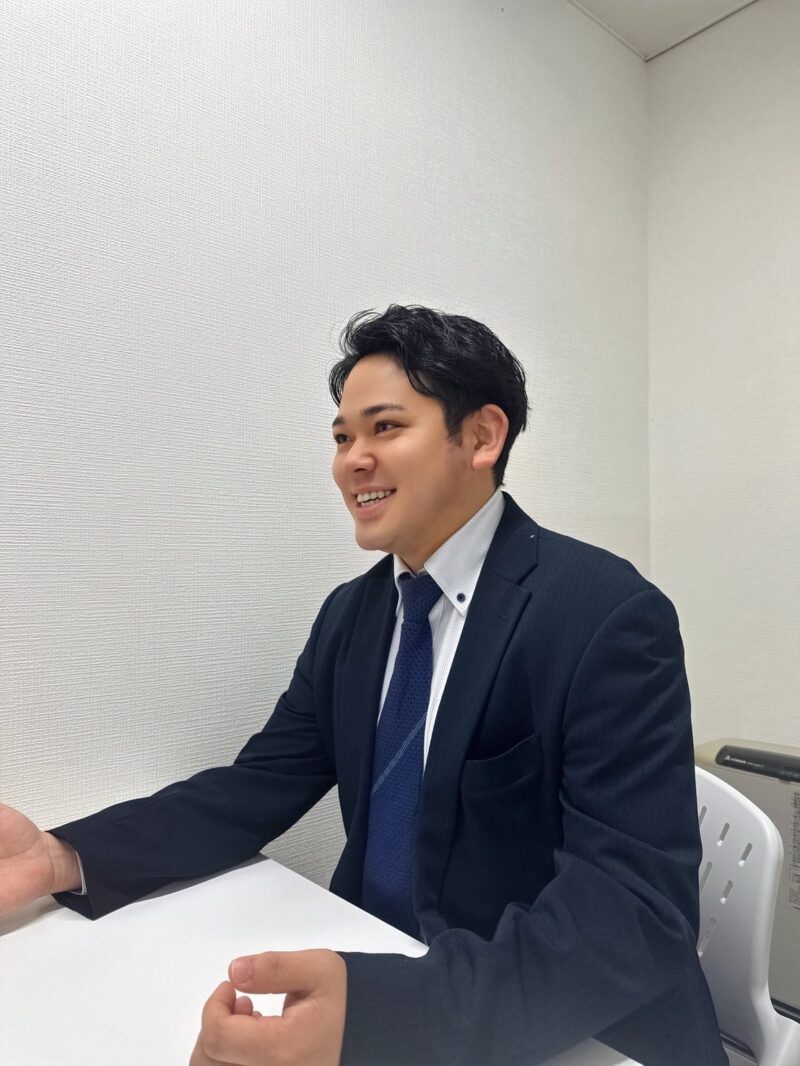
Representative director
Success in real estate investment is not achieved by luck or coincidence. I believe that every encounter, decision, and outcome is inevitable for a reason. That's why I take responsibility for each and every project and believe in finding the best path forward with reliable information and strategy.